Injective
 Bitcoin
 Quantus
 Sui
Sui Derive
 Pump.fun
 Quant
Quant

West Virginia lawmakers have introduced new legislation that allows the state treasury to allocate a portion of public funds into hard assets and select digital assets. The proposal, filed as Senate Bill 143, frames the approach as an inflation-focused strategy using assets such as Gold, stablecoins, and Bitcoin.
The bill sets strict eligibility rules for cryptocurrencies and limits the allocation size. The move adds West Virginia to a growing list of U.S. states debating how digital assets could fit into public finance planning.
Bitcoin Adoption: West Virginia Senate Bill 143 Details
The proposal, titled the “Inflation Protection Act of 2026,” would allow West Virginia’s Board of Treasury to invest up to 10% of its funds in precious metals, approved stablecoins, and qualifying digital assets, according to draft language circulating in public reporting.
A key condition in the bill is a market cap threshold. Under the proposal, eligible digital assets must have maintained a market capitalization above $750 billion during the previous calendar year, a filter that currently limits the qualifying list to Bitcoin. This requirement narrows the exposure to a small set of assets rather than opening broad access to smaller cryptocurrencies.
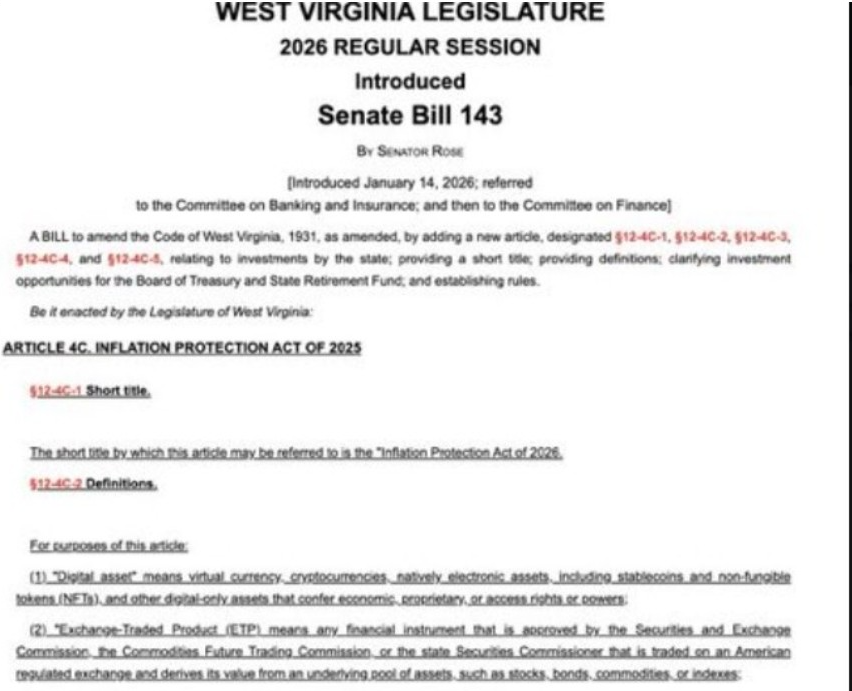
With the $750 billion threshold in place, West Virginia’s crypto exposure would be limited to Bitcoin at present, based on the market size requirement outlined in the legislation. That structure reduces the number of eligible assets and avoids expanding the mandate to include more volatile tokens.
The bill also includes stablecoins among permitted holdings, provided U.S. regulators approve them at the federal or state level.
Arizona Advances a Bill for Paying Taxes and Fees with Bitcoin
While West Virginia’s focus is on treasury investment, Arizona lawmakers are advancing a different approach tied to payment rails. Arizona Senate Bill 1043 would authorize state agencies to accept Bitcoin for taxes, fees, and fines, giving residents a way to pay government charges using crypto.
The Arizona proposal includes a conversion requirement designed to avoid holding Bitcoin. Under the bill’s structure, as described in reporting, any Bitcoin received would be converted into U.S. dollars immediately, meaning the state would not retain crypto as a balance-sheet asset through the payment program. This keeps the legislation focused on processing payments rather than building a long-term treasury position through collections.
Strategic Bitcoin Reserve Frameworks
Arizona lawmakers have also advanced SB1042, a companion proposal that would allow certain public funds to hold Bitcoin through a strategic reserve structure tied to federal custody language. Public reporting says the proposal would allow up to 10% of certain public funds to be allocated to a strategic Bitcoin reserve, with bills moving next to the Senate Finance Committee.
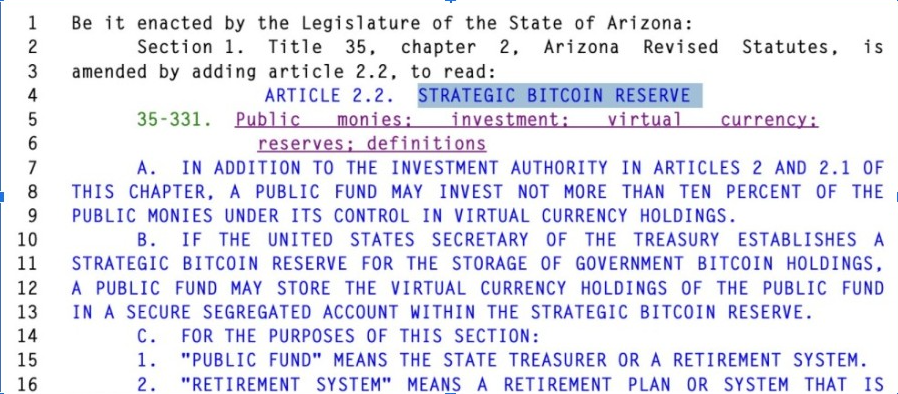
The state-level debate follows earlier steps taken elsewhere. In Texas, a reserve framework was put in place after Governor Greg Abbott signed Senate Bill 21 in June 2025, authorizing a state-backed Bitcoin reserve plan with a $10 million allocation for purchases.
New Hampshire has also been cited in public coverage as passing legislation that allows public funds to be allocated into Bitcoin through a formal legal structure. In several other jurisdictions, Bitcoin reserve bills have stalled in committee or failed to advance due to debate over risk controls and public fund policy design.