
 streamoors
 IGNITION
 Injective
 Quantus
 NEAR Protocol
 Pearl
Pearl LayerZero

XRP price is trading near a decisive support area as sellers maintain pressure below $1.10. The four-hour structure shows lower highs, while buyers defend the important $1.048–$1.05 demand zone.
At the same time, the XRP Ledger is preparing its xrpld 3.3.0 software release. Five proposed amendments target privacy, atomic settlement, delegated permissions, and simpler onboarding for institutional users.
XRP Price Defends the $1.05 Support Zone
XRP price is trading near $1.063 after failing to sustain its latest recovery above short-term moving averages. The four-hour chart shows price holding slightly above the $1.048 support level.
Crypto analyst EGRAG Crypto noted $1.05 as the immediate battleground between buyers and sellers. Bulls must defend this level before attempting another move through nearby resistance.
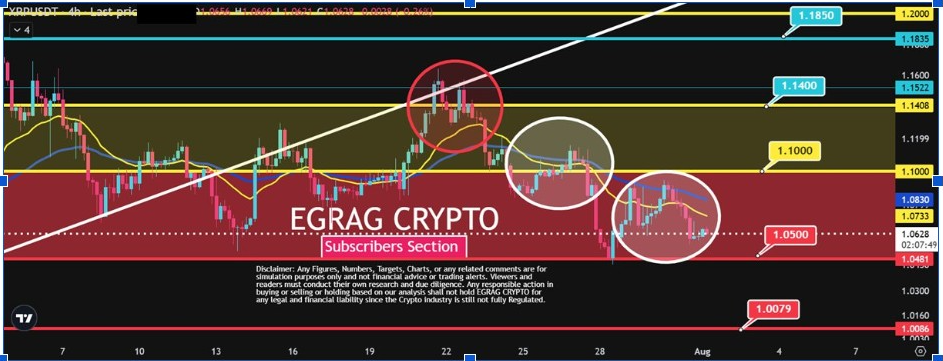
The first recovery level sits near $1.083, where a moving average and recent price reactions create resistance. Reclaiming that zone could support another challenge of $1.10.
However, the chart shows several lower highs following XRP’s rejection near $1.15. This structure suggests buyers still need stronger confirmation before controlling the short-term trend.
A four-hour close above $1.10 could open targets near $1.14 and $1.183. Further strength may expose $1.20 before the larger $1.30 resistance area enters focus.
Nevertheless, losing $1.048 would weaken the current setup. The chart identifies a major liquidity area between $1.008 and $1.00 as the next downside zone.
Analysts Watch XRP’s Long-Term Trendline
Notably, ChartNerd identified a multi-year ascending trendline supporting XRP’s broader market structure. The analyst said XRP price is approaching another possible test of that baseline.
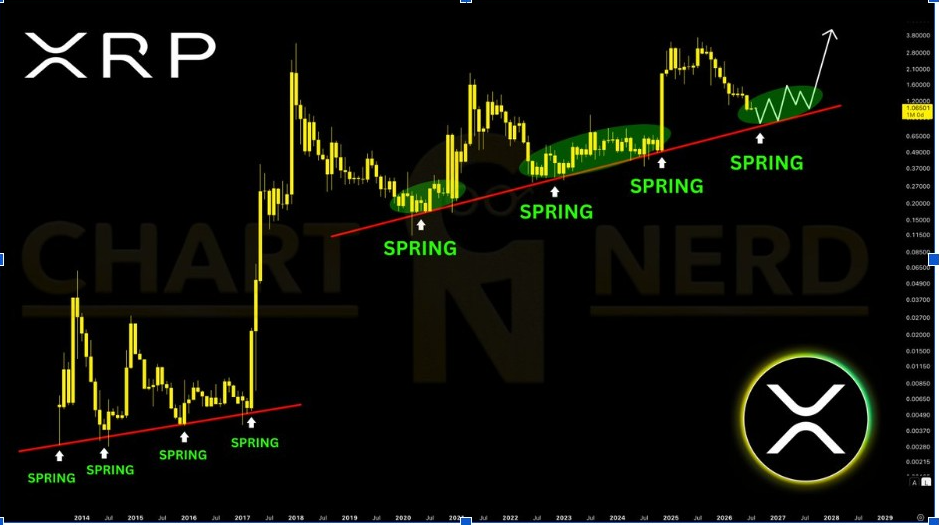
The long-term chart highlighted several previous “spring” formations near rising support. Similar structures appeared before major expansion periods during earlier XRP market cycles.
The latest pullback places XRP near the trendline extending from its 2020 market low. ChartNerd describes the potential contact as a structural reset rather than a complete breakdown.
XRPL v3.3.0 Brings Five Proposed Changes
Meanwhile, the XRP Ledger is moving toward its next significant software release. RippleX Head of Product Jazzi Cooper outlined five possible amendments for xrpld 3.3.0.
The release is expected next week, although the amendments will not activate automatically. Validator operators must review and approve each change before enforcement across the network.
Cooper said XRPL already supports tokenized assets at scale. The new features aim to expand their use across transfers, trading, collateral management, and settlement.
One proposed amendment introduces Permission Delegation. This feature allows institutions to assign narrowly defined transaction permissions without transferring control of their signing keys.
Treasury teams could authorize routine operational activities while protecting sensitive issuance authority. This structure may help institutions separate daily functions from higher-level account controls.
Moreover, Sponsored Fees and Reserves could enable banks, issuers, or platforms to cover users’ transaction costs. Sponsors could also fund account reserve requirements.
Users would still control their accounts and private keys. However, they would not need to acquire XRP before accessing supported network services.
Privacy and Atomic Settlement Enter Focus
Furthermore, Confidential MPT adds privacy capabilities to Multi-Purpose Tokens (MPTs) on the XRP Ledger. The amendment uses elliptic-curve encryption alongside zero-knowledge proofs.
The amounts of tokens held by token issuers and holders could be hidden from the general public. Designated parties could still access transaction details when regulatory or audit requirements apply.
Cooper argues that financial institutions often require privacy before using public blockchain infrastructure. The feature aims to offer confidentiality without eliminating any oversight.
Consequently, every transaction inside the batch either succeeds together or fails together. This design supports delivery-versus-payment structures and other atomic settlement workflows.
Dynamic MPT represents the fifth proposed amendment. It allows issuers to adjust selected token properties after issuance without creating an entirely new token.
Those properties may include transfer fees, metadata, and other predefined settings. Issuers could therefore adapt token structures while preserving the original asset.
The network recently activated fix_Cleanup3.2.0 on July 29. The amendment gained more than 85% validator consensus before taking effect.



