Zcash
Zcash Sui
Sui Celestia
 Quantus
 Injective
 Hyperliquid
 LayerZero

Bitcoin ETFs are doing well this month, helped by the ongoing recovery. They added over $774 million in assets on Tuesday after adding $998 million on Monday. These additions have added $2 billion this month, after adding $3.52 billion last month. This article focuses on another Bitcoin ETF that pays a monthly dividend.
BTCI ETF Assets Have Jumped to $1.32 Billion
NEOS, a company that Goldman Sachs is acquiring in a $2.25 billion deal, launched the NEOS Bitcoin High Income ETF (BTCI) in 2024. This fund has continued to see substantial inflows this year, even as the crypto winter accelerated.
Data compiled by ETFdb shows that the fund has seen over $651 million in inflows this year, bringing its assets under management (AUM) to over $1.39 billion.
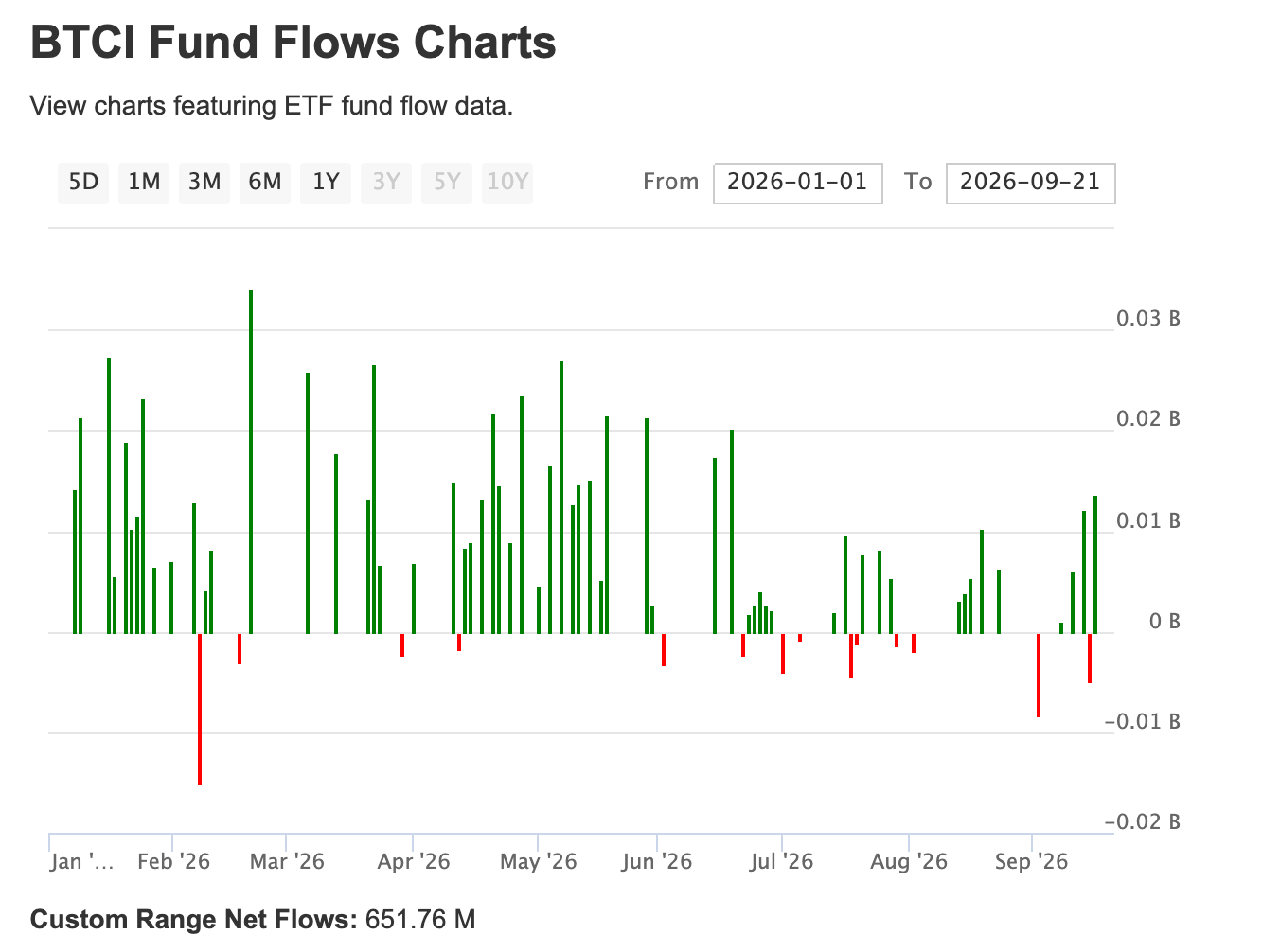
BTCI ETF inflows | Source: ETF Db
BTCI ETF is a unique fund compared to the spot Bitcoin ETFs like those offered by companies like BlackRock, Fidelity, Grayscale, and Bitwise.
This fund is unique because it does not own Bitcoin directly. Instead, the fund invests in the iShares Bitcoin ETF (IBIT) and the VanEck Bitcoin Trust (HODL). It also invests in short-term US Treasury Bills. These investments help it to benefit whenever Bitcoin is rising.
At the same time, the fund uses the options market to generate returns. It does this by selling (writing) call options on one or more Bitcoin-related assets like HODL or IBIT. By doing this, the fund receives a premium, which it can use to distribute to investors as a dividend.
Data on its website shows that the fund has a distribution rate of 25.60%. Its trailing twelve-month (TTM) distribution rate is 36.5%. These are all huge rates considering that a $100,000 investment in the fund should have earned about $36,000 in dividends in the TTM.
In contrast, unlike other tokens, Bitcoin does not pay a monthly return. The same is true with other conventional Bitcoin ETFs like IBIT, FBTC, and HODL.
Is This Bitcoin ETF a Good Investment?
The main benefit for investing in the BITC ETF is that it provides substantial dividends to its investors.
However, there are several main challenges to investing in the fund. The main one is that it is a highly expensive fund, with an expense ratio of 0.98%. This is a high ratio, given that the Vanguard S&P 500 ETF (VOO) charges just 0.03% annually.
The IBIT ETF charges an expense ratio of 0.25%, while Morgan Stanley’s Bitcoin ETF (MSBT) costs just 0.14%. That difference in the expense ratio can be substantial.
Another challenge is that, while the BTCI ETF has a generous distribution its total return is not all that good. Total return looks at the amount an asset generates from price appreciation and dividends.
As the chart below shows, the BTCI ETF has had a total return of-4.36% this year, while Bitcoin has slipped by 2.63%. This means that an investor who holds Bitcoin has generated a better total return.
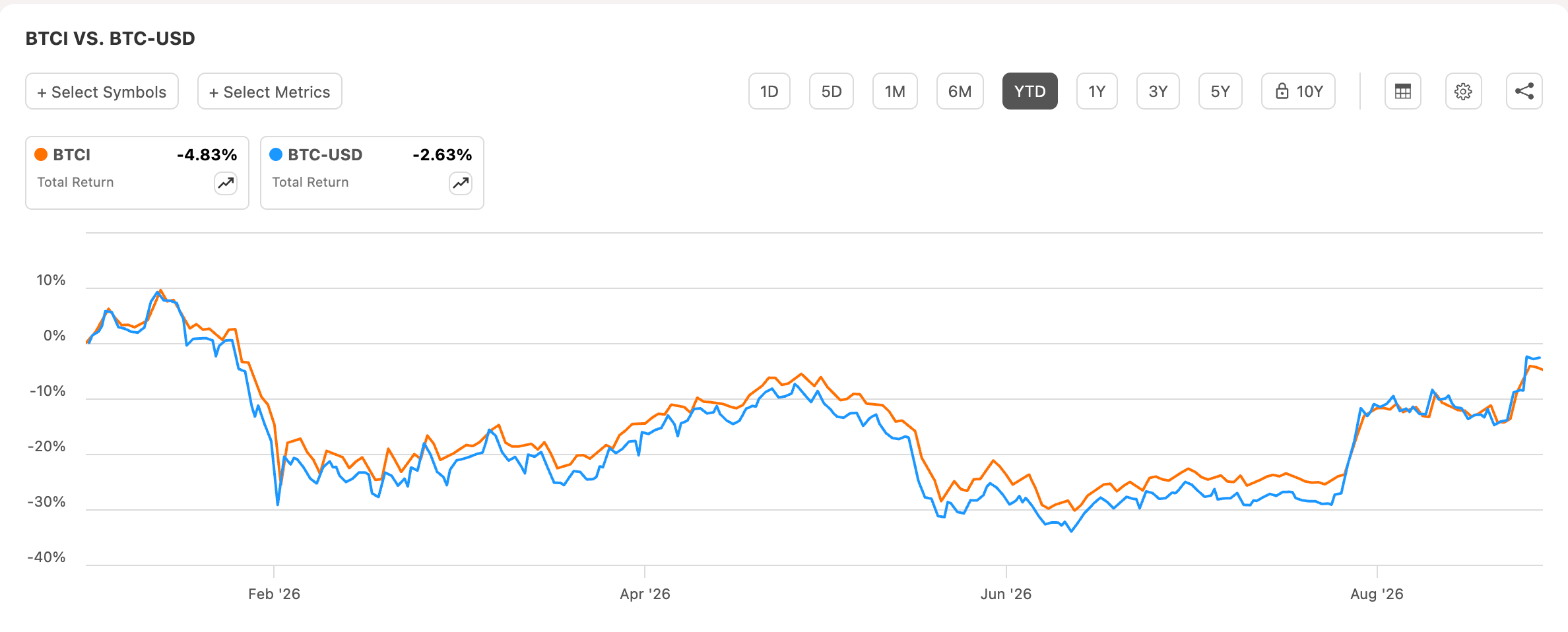
The same trend has happened in the last 12 months. BTCI has had a total return of minus 23%, while Bitcoin has dropped by 22%.
A closer look at other covered call ETFs shows that they tend to underperform their core assets. A good example of this is the MSTY ETF, which tracks Michael Saylor’s Strategy. It has consistently underperformed the underlying asset over the years.