
 Altai the Tiger
 Sword Inu
 streamoors
 IGNITION
 NEAR Protocol
 Pearl
Pearl Injective

The S&P 500 Index closed at 6,538.76 at the end of Thursday’s trading session, marking a 1.56% drop. During those hours, BTC briefly fell below $86,000.
As of writing this report, Bitcoin BTC was trading at $83,140, down by over $2,500 over the last few hours. The last 24 hours saw crypto liquidations hit $954.55 million. This includes $836.14 million longs and $118.62 million shorts; 252,817 traders were liquidated in that span.
Several market commentators noted that nothing unusual had been reported that could have led to the crash. Eric Balchunas, senior ETF analyst at Bloomberg, echoed the lack of clarity. However, Bitmine Chairman explained the crash, highlighting clues in the October 10th meltdown.
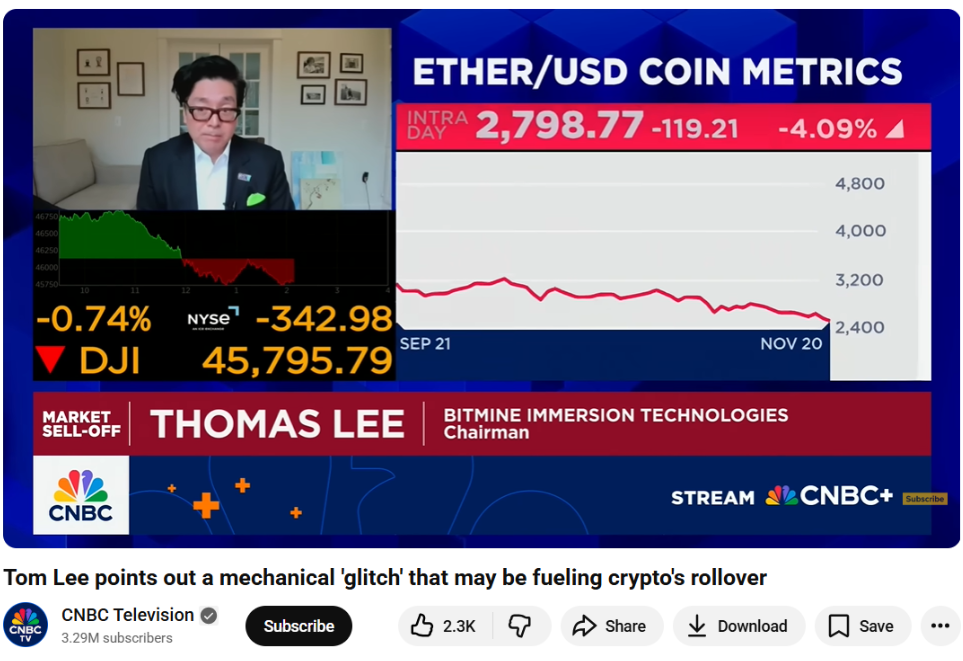
Liquidations suggest that the implosion is partly explained by the leverage-fueled trader positions and fear. Tom Lee, chairman of Bitmine, explained an exchange glitch caused the cascade. He added that a liquidation feature amplified the impact.
Tom Lee Says Thursday’s Crash Looks Like an “Echo” of October 10th
Tom Lee told CNBC the market has been limping since October 10. He said a negative shock triggered the weakness. Market makers suffered heavy losses that day. They were forced to sell assets quickly. Their goal was to shrink the hole in their balance sheets.
Citadel Securities, the world’s largest market maker, defines market makers as follows: “A market maker participates in the market at all times, buying securities from sellers and selling securities to buyers.
Market makers provide liquidity, ensuring that investors can trade quickly and at a fair price in all market conditions. In turn, this generates confidence in the markets.”
When asked what precisely caused Thursday’s crash, Lee said that erroneous stablecoin prices on an exchange triggered the automated deleveraging or “ADL” on that exchange. Lee declined to reveal specific names.
The FundStrat founder stated that the price discrepancy resulted from a coding error. He added that the exchange should have used external quotes instead of relying only on internal ones.
The resulting capital loss forced market makers to sell in order to cut their losses. Lee also said that the ADL-based crash will never happen again.
Lee remarked that in November 2022, a similar drawdown, where market makers were hurt, took eight weeks to recover.
Other Possible Explanations for the Bitcoin BTC Crash
The Kobeissi Letter (henceforth referred to as TKL) believes that market sentiment is ‘binary’ presently. This explains that the AI-frenzy was polarizing sentiment.
In the X thread, the market commentator noted that rising prices triggered fear of missing out. This FOMO-driven momentum led to extended moves. On the flip side, when prices fell, it would trigger the fear of being the last to cash out.
TKL added that by Thursday, the stock market had been affected by record levels of leveraged trading, just like Crypto.
Extreme fear was another reason for the pronounced price drop, TKL noted. The Fear and Greed Index was at 7 despite the S&P 500 being just 5% away from its all-time high (ATH).
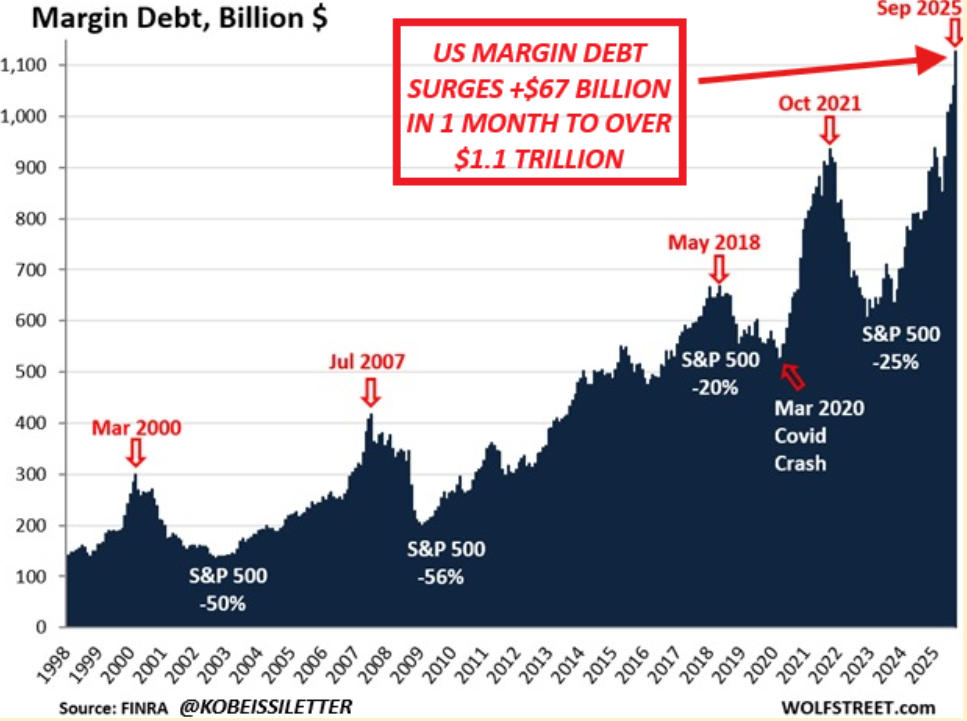
Scott Melker (The Wolf of All Streets on X) reported that JP Morgan Chase said that retailers were selling spot Bitcoin (BTC) and Ethereum (ETH), thus driving November’s correction.
However, crypto spot ETF data shows that retailers might not have to share all the blame. Yesterday, BTC Spot ETFs offloaded $355 million; month to date, the BTC ETFs have shed a whopping $3.79 billion.
November is not over yet, and it has become the worst month for both BTC and ETH ETFs by net outflows. CryptoQuant’s head, Ki Young Ju, noted that BlackRock’s BTC Spot ETF has sharply reduced its Bitcoin holdings. The fund reduced exposure by over $1.09 billion in just seven trading days.
BTC Spot ETFs have reported cumulative net outflows as of today in November. ETH Spot ETFs have been on an eight-day outflow streak.
TKL suggested that the new schedule of US macroeconomic data releases added to market uncertainty. He said the government’s reopening made the timing of reports more disruptive.



