
 Bitcoin
 Pearl
Pearl Starknet
 Zerebro
 NEAR Protocol
 Solana
 Quantus

Arthur Hayes warned that prolonged U.S. military engagement in Iran could push the Federal Reserve toward renewed monetary easing, a move he argued would propel Bitcoin toward $575,000. He published the view on Monday in a blog post, linking geopolitical escalation to liquidity expansion. His thesis arrived as reports circulated that the Federal Reserve would inject $8.01 billion at 9:00 a.m. Eastern Time as part of a broader $53 billion quantitative easing effort.
The Bitcoin price often reacts to liquidity shifts, especially during periods of fiscal strain tied to conflict. Hayes framed his argument around historical precedent, asserting that monetary expansion followed prior Middle East interventions. Markets, therefore, weighed whether current tensions could trigger another policy pivot, a scenario that would alter risk appetite across crypto assets.
Immediate Market Reaction Remained Measured
The Kobeissi Letter reported that U.S. stock index futures opened marginally lower after Israel and the United States launched airstrikes on Iran over the weekend. Oil initially spiked but erased nearly half of its opening gap within hours. The S&P 500 declined less than 1% in early trading, suggesting investors did not price in an extended regional war.
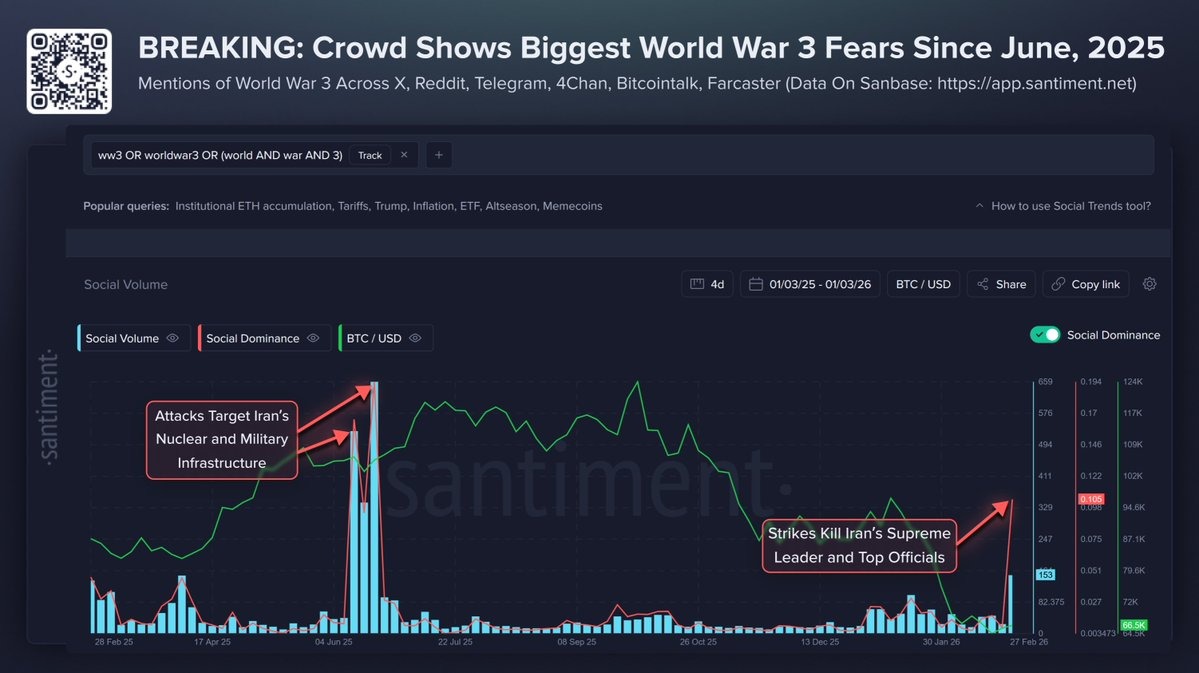
Santiment data showed a spike in social media mentions of “World War 3,” though activity stayed below levels recorded during a prior twelve-day confrontation in June 2025. That reaction mirrored typical retail behavior during geopolitical shocks, where online discourse outpaced institutional repositioning. While volatility increased briefly, derivative markets avoided disorderly liquidation cascades.
This muted response mattered because Hayes’ thesis depended on sustained fiscal strain rather than a short-lived conflict. If escalation faded, the Federal Reserve would face less political pressure to adjust policy. As a result, crypto traders monitored Treasury yields and liquidity facilities more closely than battlefield developments.
Historical Pattern Anchored The Bitcoin Price Call
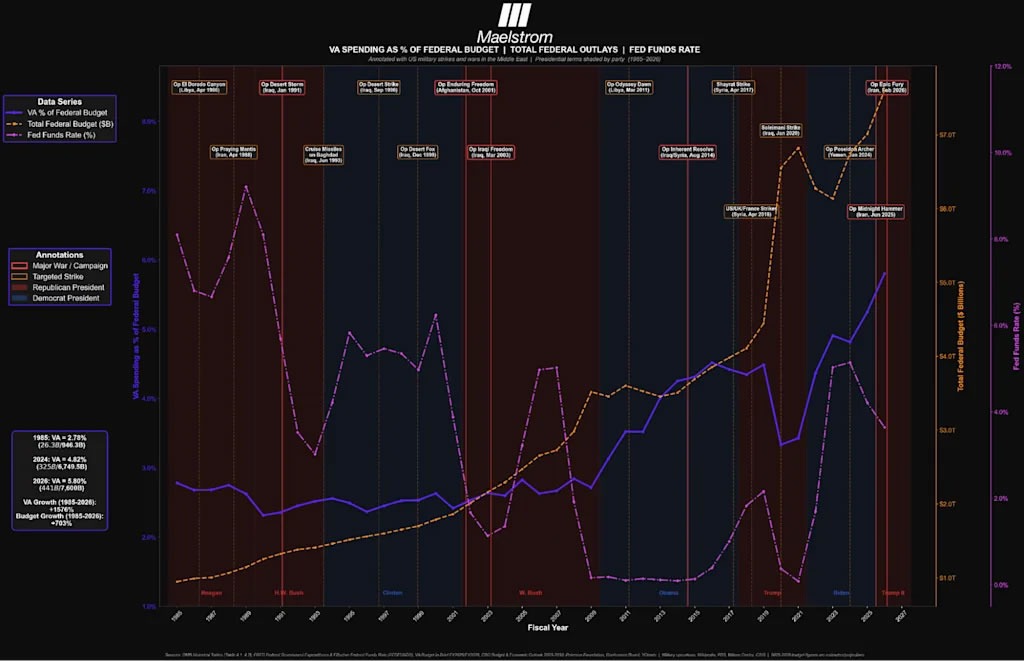
In his blog, Hayes argued that every U.S. president since 1985 has initiated military action in the Middle East, and that each episode has coincided with easier monetary conditions. He cited the Gulf War in 1990, the post-Sept. 11 campaign in 2001, and the Afghanistan troop surge in 2009 as examples where rates fell or liquidity expanded. That historical framing formed the backbone of his Bitcoin price projection.
He contended that prolonged Iranian nation-building would raise the likelihood of lower borrowing costs and higher money supply growth. Hayes wrote that the prudent strategy was to wait for confirmation of rate cuts or balance sheet expansion before accumulating Bitcoin and select altcoins. The logic rested on the asset’s sensitivity to dollar liquidity rather than battlefield outcomes.
Recent commentary from Hayes also referenced alternative catalysts for easing, such as stress in Japanese bond markets and domestic credit contraction risks. Those themes reinforced his view that the Federal Reserve possessed multiple incentives to loosen policy. Still, none of those triggers had materialized into formal rate reductions at the time of publication.
Liquidity Tools And Policy Signals Under Scrutiny
Federal Reserve communications in recent months maintained a hawkish tone amid sticky inflation. However, traders tracked repo operations and reserve-management purchases for early signals of balance-sheet shifts. Any acceleration in those tools would imply a quiet easing before headline rate cuts.
The reported $8.01 billion injection and broader $53 billion quantitative easing program, if confirmed, would represent a material liquidity event. Yet official statements from policymakers had not framed the operation as a structural pivot. Market participants, therefore, treated the development as tactical support rather than a regime shift.
Hayes’ argument assumed that fiscal expansion tied to conflict would require sustained monetary accommodation. That scenario would increase the dollar supply and potentially weaken real yields, conditions that historically have benefited Bitcoin’s price. Still, the Federal Reserve balances inflation control against financial stability, and that trade-off remained unresolved.
Outlook now hinges on policy language at the next Federal Open Market Committee meeting and subsequent liquidity data releases. If officials signaled tolerance for balance-sheet growth, traders would likely quickly reassess risk exposure. Absent that signal, the Bitcoin price may continue tracking macro indicators and geopolitical headlines rather than speculative projections.



