
 Pearl
Pearl Walrus
 Starknet
 Quantus
 Bitway
 Sui
Sui Zylo Ecosystem

Swift has moved its blockchain-based ledger into initial use after nine months of development. Seventeen global banks will prepare live pilots using tokenized deposits for cross-border payments. The blockchain news targets 24/7 money movement, including nights and weekends. It also keeps the banking controls used in current payment systems.
Swift Moves Blockchain Ledger From Concept to Use
Swift said the ledger will act as a shared layer for bank-issued tokenized deposits. Banks will still issue and manage deposits on their own ledgers. However, Swift’s system will help organize the movement of value between participating institutions.
The first use case focuses on cross-border payments. Banks can move funds for customers before final settlement happens through existing systems. This blockchain news allows faster payment activity without removing current compliance, credit, risk, and control checks.
The system also gives banks a way to test digital value under regulated conditions. That matters because many financial firms want faster rails without leaving trusted banking structures. Swift aims to support that shift through its existing global network.
Blockchain News: Seventeen Banks Join First Live Pilots
The first group includes ANZ, FirstRand Bank, OCBC, BNP Paribas, HSBC, Standard Chartered, BNY, Itaú Unibanco, UBS, Citi, Lloyds Bank, UOB, DBS, Mashreq, Wells Fargo, First Abu Dhabi Bank, and MUFG Bank. These banks come from six continents and reflect broad demand for regulated digital payment tools.
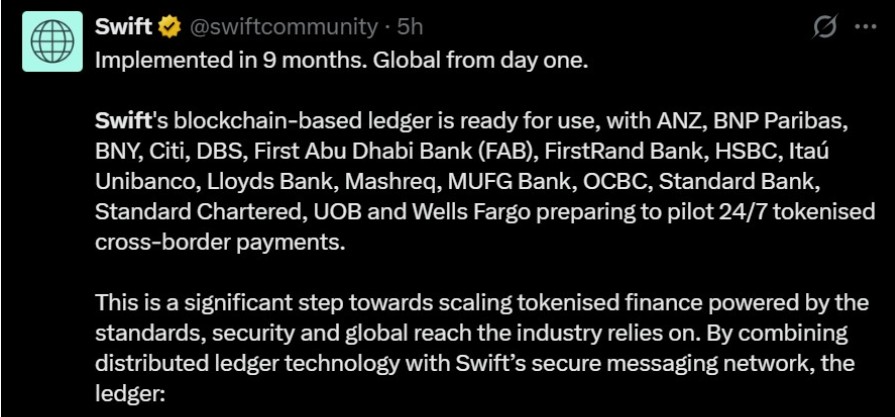
Swift said the banks will test live transactions in a controlled phase. The pilots will show how tokenized deposits can support round-the-clock payments across borders. They will also test how banks can manage liquidity during hours when traditional systems may not operate.
Several banks linked the project to faster settlement and better cash-flow visibility. HSBC said the model can support corporate clients that work across time zones. DBS also pointed to the need for interoperability between new ledgers and current payment rails.
Tokenized Deposits Target Faster Cross-Border Payments
Tokenized deposits represent commercial bank deposits in digital form. They differ from many stablecoins because banks issue them within existing financial rules. That structure may appeal to institutions that need speed but also require strong oversight.
The Swift ledger will not replace all current payment systems at this stage. Instead, it will work beside them during the first phase. Banks can move tokenized value through the ledger, while final settlement still uses established rails.
Banks may use this approach to manage liquidity more efficiently. Payments can move beyond normal banking hours, reducing possible delays for businesses.
Swift Builds on Existing Global Payment Network
Swift already supports payment communication across more than 200 markets. The cooperative said 75% of payments on its network reach beneficiary banks within 10 minutes. Many payments already arrive in seconds, but banks still face limits from settlement windows.
The new ledger adds another layer to those existing improvements. Swift is also working with its community on upgrades to retail payments. The blockchain news aims to improve fee transparency, full value delivery, and speed for consumers.
Swift said the ledger may support future use cases, including programmable money and agentic commerce.



